“You’ve got to spread love and happiness”: How Barry Hearn transformed darts into a global phenomenon

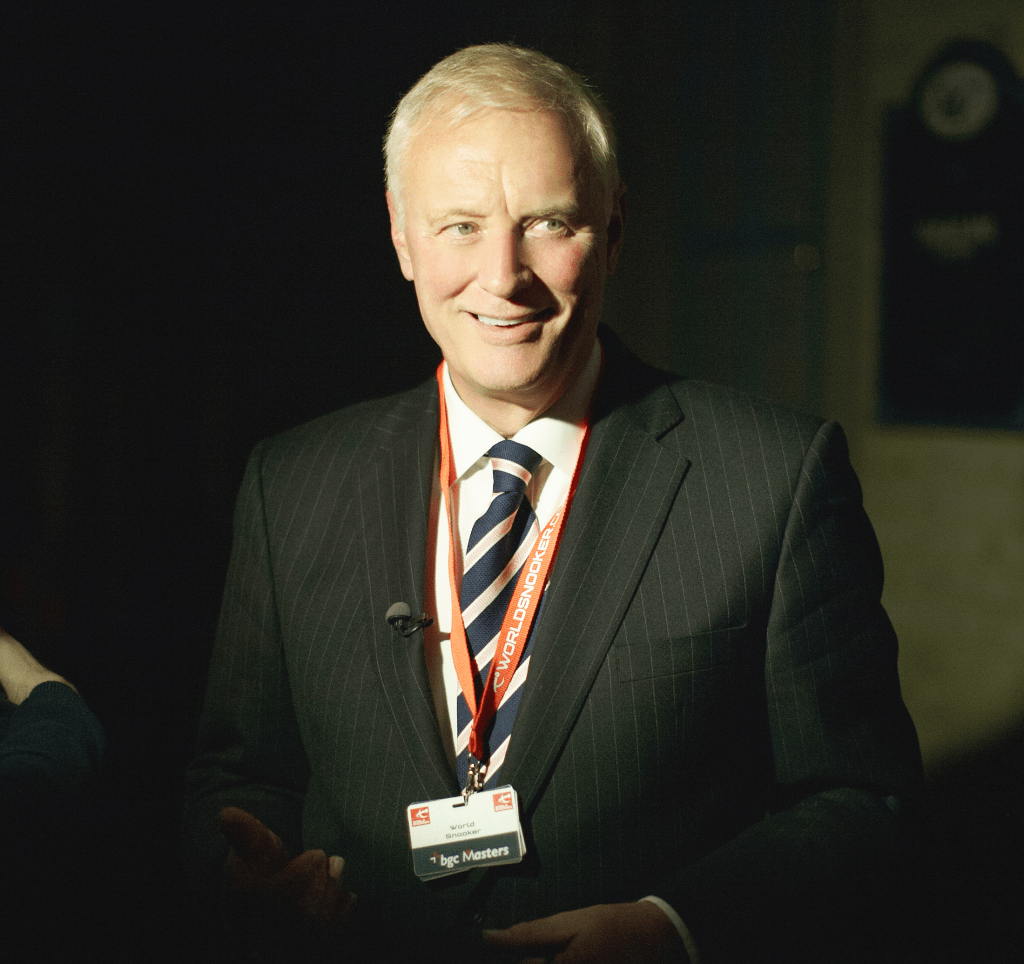
Barry Hearn in 2012, known for his transformative influence on sports like snooker, darts, and boxing.
Credit: Image by Matt Fowler, CC BY-SA 3.0, via Wikimedia Commons. Link.

Raucous fans, fancy dress, packed arenas. A sport once tied to local pubs is now prime time, global entertainment. And behind it all is Barry Hearn, the larger-than-life promoter whose Midas touch elevated darts from smoky boozers to the Ally Pally stage. This is how he did it.

Through his company, Matchroom Sport, Hearn has become one of the most influential figures in darts, eventually serving as chairman of the Professional Darts Corporation (PDC) until 2021. Reflecting on his journey on his podcast ‘The Barry Hearn Show’, Hearn shared how he transformed darts from pub entertainment to a global spectacle.

In the early 1990s, the British Darts Organisation (BDO) was struggling, and in a transitional phase for the sport, the PDC broke away, determined to carve out its own path. They approached Hearn, already a successful promoter of snooker, boxing, and football, hoping he could work his magic on darts.

“You never know when an opportunity is going to slap you in the face, and the good Lord smiles,” Hearn jokes.

He recalls meeting trailblazing figures who were passionate about darts, with a vision of where it should be and frustration that it wasn’t there yet. It was at The Circus Tavern, a local venue in Essex, where Hearn saw the potential of darts and was immediately hooked.

“You couldn’t see across the room for smoke,” Hearn recalls. 

“There were bookmakers in the corner, people betting on 180s, who’d hit a 170 checkout, the big fish. They were having a few beers and chanting with their mates. 

“But in front of them, through all this atmosphere, was world-class sport. And I thought, if I wanted a night out, I’d come here.”

For Hearn, it was more than a business opportunity; darts was a passion project. He was drawn to the people, the stories, and the atmosphere surrounding the sport.

“I could see in darts, even back then, I liked the customers,” he adds. 

“They were ordinary people from where I came from, just wanting a good night out. Nothing complicated.”

That sentiment holds true today, with the fan culture and atmosphere preserved as darts has ascended to the big leagues.For darts to have its current reputation, Hearn also credits the players and their personalities, whose charisma contributes to the sport’s excitement.

He hilariously recalls the late Jocky Wilson, a darts legend, dampening fellow pro Rod Harrington’s party piece of catching a dart mid-flight by stabbing him in the belly with another dart.

“Jocky was on the floor in hysterics, and Rod was just looking at his shirt as a trickle of blood rolled down. No lasting damage, but that was darts,” Hearn laughs.

Darts, however, isn’t about practical jokes. Behind it are players who want to win, but these individuals, who honed their skills in pubs and clubs, knew they had to entertain.

“In working men’s clubs, you had to be interesting, or people wouldn’t come to watch,” Hearn says. 

“You needed a quick line, a shout-back, an answer.”

Perhaps none did this better than the ‘Crafty Cockney’ Eric Bristow. Around Bristow, Hearn built the characters that now captivate darts fans.

“He had persona. He had charisma, and he didn’t give a monkeys. Fans would throw beer cans at him, and he thought it was hilarious, knowing he’d got to them.”

“When you put together great shows, you’re a ringmaster. You need an angle, you’re selling tickets, you’re trying to get ratings, you want headlines and people talking about it,” Hearn explains. 

“You need those characters because they’re priceless.”

With TV in mind, Hearn knew that while darts had a marketable raw product, it needed exposure. When Sky offered a deal, the ratings rocketed. TV brought quirks like fancy dress and signs, giving everyone their moment of fame. Hearn recalls a fan, famous for dressing as a chicken, calling him for a ticket.

“I said, ‘I’ve got a geezer on the phone saying he’s the chicken,’ and the team said, ‘oh, the chicken hasn’t got a ticket? We’ll get him in.’ He was the first I remember in full costume.”

The atmosphere became as much a part of the darts experience as the matches themselves. Fans weren’t just spectators, they were part of the show, whether through wild costumes, signs, or chants. Hearn understood that this sense of inclusion, where everyone had a role in the spectacle, was key to building a loyal following and an experience people wanted to come back to.

“You’ve got to spread love and happiness,” Hearn adds. “When people go to the darts, they have a great time and tell their mates the next day and this is the ultimate marketing tool.”

The potential Hearn saw has been fulfilled and more, with the 2024 World Champs Finals between Luke Humphries and Luke Littler attracting the highest ever non-football audience on Sky Sports at 4.8 million.

With Sky’s backing, Hearn’s ambitions took darts global. Packed arenas across Europe and even Madison Square Gardens in New York now sells out in minutes.

“Madison Square Gardens sold out for darts, with 70% of the crowd in fancy dress. Where did that come from?” Hearn says.

Hearn’s success isn’t waning, with demand driving tours in countries like Poland, Australia, and the Middle East.

“Whether it’s New York or Auckland, they can’t get enough. Broadcasters are coming in, paying more,” Hearn says.

With increasing revenue, Hearn views this as a chance to improve competitiveness and the sport’s quality.

“You’ve got to give kids a chance. If they can earn money, they’ll put in more hours, make sacrifices, and the snowball starts,” he says.

He’s delighted that players from humble, working-class backgrounds can benefit. 

“I remember Nathan Aspinall, he got to the semi-finals, and he won £100,000. He said, ‘my house cost me 30 grand! It’s the most unbelievable day I’ve ever had.’”

With money and TV deals, Hearn believes darts will only improve for players. “Soon, they won’t just be millionaires, they’ll be multi-millionaires.”

Hearn’s commitment extends to the sport’s future through youth programs like the Junior Darts Corporation (JDC). Rising star Luke Littler, who joined the JDC at 10, is already making a significant impact, captivating audiences and redefining the sport for a new generation.

“He could be one of the greats, and that’s the sacrifice he has to make,” Hearn says. “He hit a nine-darter in his first match after the World Championship. We’re being entertained by greatness.”

Littler’s presence on the darts scene has been pivotal in attracting a younger audience to the sport. Littler connects with fans who might not have seen themselves in darts before. This younger fan base is invaluable, bringing fresh energy and ensuring the sport’s longevity in the newest chapter of the sports rapid rise. 

As darts continues to evolve,  Hearn’s influence is evident in every aspect of the sport. His relentless drive to elevate darts has created a thriving community which we as fans are the beneficiaries of. 

Reflecting on his journey, Hearn is proud of his legacy. “In my own way, I’m building something for when I’m gone. I’d like darts players in 50 years to raise a glass to me. Is that big-headed? I don’t care. I know I’m doing a good job.”

To any doubters, his message is clear: “All those snobs, looking down their noses—fat blokes, pot bellies, smoking, drinking, darts? Look at them now. They’re the ones phoning me up, begging for a ticket. And I love it.”
A look ahead to the WTA Finals, the latest chapter of the Saudi sportswashing debate

The WTA Tour Finals land in Saudi Arabia next week, where homosexuality is criminalised, following guidance from organisers advising players to express support for the event’s location.

The tournament in Riyadh is the latest to face scrutiny over Saudi sportswashing, with the WTA anticipating tough questions about the Kingdom’s human rights record. 

Players were advised in an October meeting: “Consider saying, ‘I’m happy to play wherever the WTA Finals is hosted; it’s a prestigious event.’”

With a record $15 million prize fund, the largest in the tournament’s history, former world number one Garbiñe Muguruza is serving as tournament director and hopes the event will leave a lasting impact. 

She said: “We want to have stability.

“The WTA Finals is the last diamond of the year, where the best of the best has to be there and perform.”

Muguruza’s remarks come after the 2023 Finals in Cancun descended into chaos, with rain pouring into a temporary outdoor stadium set up in a car park. 

In contrast, Saudi Arabia promises luxury accommodation and high-quality facilities, hosting the event at a 5,000-seat stadium at King Saud University.

Yet questions persist amid accusations that Saudi Arabia is using sporting events to veneer its human rights record, especially given the WTA’s values of inclusivity. 

Muguruza noted: “All the players have asked many questions. 

“Will we be welcome? How are we going to be treated? Is everyone welcome, including people in the LGBTQ community?”

She reassured players that in her visits to the country she saw women in upper management roles and feels confident everything will be normal.

Previous WTA events in the Middle East, such as those in the UAE, have struggled to attract large crowds, contrasting with the atmosphere Muguruza experienced in Guadalajara in 2021, where she won the finals. 

This disparity raises more questions about Saudi Arabia as a host, with Muguruza aware that crowd engagement could make or break the event. 

Reflecting on Guadalajara, she added, “Having the stadium full almost every session and having the crowd involved, I think was the key.”

For Aryna Sabalenka, Iga Swiatek, Coco Gauff, Jasmine Paolini, Elena Rybakina, Jessica Pegula, Zheng Qinwen, or Barbora Krejcikova, an undefeated run in Riyadh means a record breaking $5 million payout, surpassing any Grand Slam. 

With high stakes and global scrutiny, the stage is set for a WTA Finals like no other.

East London Gymnastics Centre that has trained Olympians faces closure

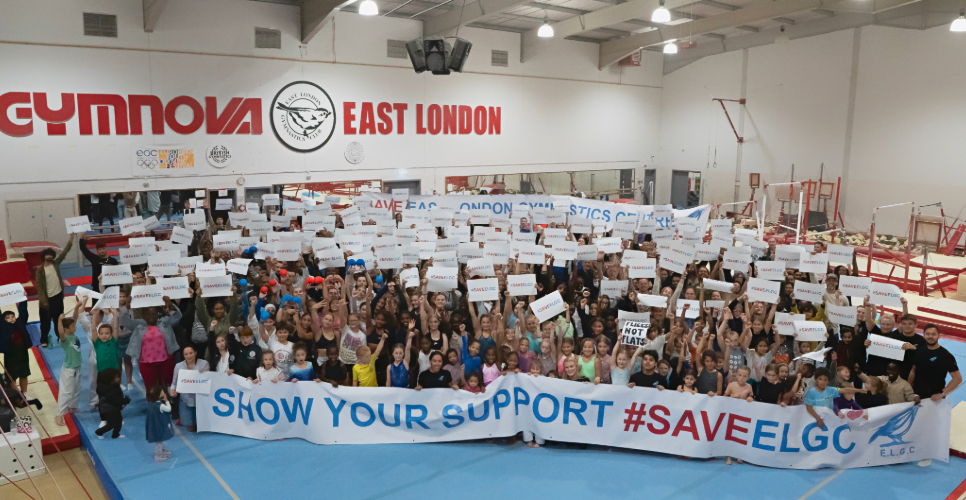
The East London Gymnastics Centre (ELGC) is facing closure due to housing development plans, putting the future of elite and community gymnastics at risk.

Since freeholders sold the site to housing development group Galliard Homes, ELGC managers Alex Jerrom and Kirk Zammit fear they will be replaced by tenants who can afford higher rates.

They have launched a petition as they look to secure the future of the gym which has trained some of the top gymnasts in the country, including Paris 2024 athlete Georgia Mae Fenton.

The fate of the ELGC has come under threat after the site it is on was bought by Galliard Homes.

Once a deal was made, ELGC was assured they could negotiate their tenancy with the new owners.

Jerrom said: “They simply replied that the redevelopment was no longer viable, and that was it.

“Later, they called to say they would keep the site for leisure, but we wondered why we hadn’t received an offer to stay.”

In response, Galliard Homes claimed to be committed to retaining the building and ensuring its financial viability.

They said: “We have secured a new tenant who will bring significant health and social benefits to the community.”

Despite Zammit and Jerrom’s concerns about poor communication, Galliard Homes disputes their claims.

Galliard Homes added: “Since agreeing to purchase the site, we have kept existing tenants informed of our plans, including the decision not to move forward with a residential-led development.”

Opened in 1998 with National Lottery Funding, ELGC in Beckton has long been a cornerstone of the gymnastics community.

Jerrom and Zammit have operated the club as a non-profit charity since 2015 and take pride in its contributions to elite gymnastics.

Zammit said: “There is so much history at this club, even before this place was built, we’ve had multiple British champions and GB team members competing at Worlds and Euros.”

Zammit described the club as a hub of London regional gymnastics. 

He said: “We currently have two girls on the GB team and another on the Polish national team.

“Next year, we are likely to have three more girls join the GB team, more than anyone else in Greater London.

“Without this facility, future Olympians won’t have anywhere to train.”

Beyond gymnastics, the centre impacts the broader community by supporting various groups and businesses, including a circus school.

Despite the progress of the ELGC, the prospect of closure is becoming increasingly likely.

Jerrom said: “There’s no other facility that’s affordable and large enough for us to move into, so we will be forced to close the club down.”

They worry that in a low-income area like Newham, the changes brought by developers are part of a trend of closures.

Zammit added: “In Newham, there used to be four leisure centres, but two are closed, and one is soon to close.

“Soon, there will be one leisure centre in the entire borough.”

Many similar spaces have already been lost, including The Hub, a vital dance space, Overgravity, a tricking gym in Bow, and Parkour Generations Chainstore, significantly impacting arts and sports communities.

There are also concerns that new tenants will not maintain the community impact of ELGC, with fears that developers will favour economic gains over engagement.

Jerrom said: “They’re likely to bring in something like a fitness gym or a bowling alley.

“Leisure is such a broad category that it won’t be a community centre or hub, and it won’t foster social interactions.

“The friendships and lifelong connections built here are invaluable.”

Beyond elite sports, the gym serves as a sanctuary for community members who benefit from its positive impact on well-being.

Zammit added: “Many people come here for help with their mental health, social anxiety, and self-confidence.”

This motivation drove Zammit to take over the East London Gymnastics Centre.

He reflected: “My life would have been completely different without sport giving me focus.

“I grew up in a rough area of East London, and the old East London club was where I first trained.

“I know what these kids are putting into their sport, and they need support.

“When my Mum couldn’t afford to get me to the gym, people made sure I could continue training because of their passion for the sport, and that’s why this is so important.”

Determined to fight the closure, Zammit and Jerrom have launched the SAVE ELGC Campaign.

James Asser, MP for West Ham & Beckton said: “I am truly saddened to hear of the risk of closure faced by ELGC.

“Having visited the facility I can see that it is an invaluable asset for not only those in the Beckton community, but for everyone who is passionate about elite sport across London and nationally, having trained some of our Team GB athletes.

“Losing such a resource would be a tragedy for the individuals who train at and are supported by the centre, and I will work with all those involved to insure it remains as an invaluable part of my community.”

Featured image provided by ELGC – permission to use

Team GB Rowing nomination for SJA Team of the Year

Team GB’s Olympic Rowing Team delivered a performance in Paris that will be remembered as one of the finest in British Olympic history. Winning medals in 8 out of 14 races – including 3 gold, 2 silver, and 3 bronze, they were standout performers of the Games.

After the disappointment and inquests that followed Tokyo’s 2022 regatta, they reclaimed their place among the world’s elite. Their resilience, teamwork, and determination make them clear contenders for the Sports Journalist Association’s Team of the Year award.

Paris was a story of redemption and resurgence for British rowing after the frustrations of Tokyo 2022, where Team GB won no golds and no women made the podium.

No one embodied this more than Emily Craig and Imogen Grant, whose lightweight women’s double sculls win was a regatta highlight. Missing out on an Olympic medal by 0.01 seconds in Tokyo, their gold in Paris was poetic justice. Leading from start to finish, they etched their names as eternal champions, claiming victory in the final renewal of this event.

The women’s quadruple sculls of Lauren Henry, Hannah Scott, Lola Anderson, and Georgina Brayshaw also stormed to gold, wiping the memories of Tokyo’s struggles. Their breathtaking final stroke sealed the first-ever British victory in the event, proving British rowing had rediscovered its elite status.

It wasn’t just about gold. Helen Glover, already a two-time Olympic champion and mother, returned to claim silver in the women’s four alongside Esme Booth, Sam Redgrave, and Rebecca Shorten. Their race came down to a bowball, finishing second to the Dutch, marking the first-ever podium finish for Britain in the women’s coxless four.

For the men’s pair, Tom George and Oliver Wynne-Griffith, silver was bittersweet. They rowed with heart but were outmatched by Croatia’s dominant Sinkovic brothers, who claimed their third consecutive Olympic title. Despite this, the British pair delivered their best performance of the Olympic cycle.

The climax of the regatta came with the eights. The women’s eight, bronze medalists after finishing last in Tokyo, showed they belong at the top of the sport. The men’s eight brought the regatta to an triumphant close with gold, embodying the power, precision, and perseverance that define this team.

Behind these athletes stands Louise Kingsley, the first female performance director of the Olympic programme. Taking over after Tokyo, she led a team that prepared more athletes across more boat classes than ever before, delivering extraordinary results. 

Peaking at the Olympics requires technique, power, pacing, and, above all, belief. Kingsley and her coaching team created that synergy across the board and the achievements of the team are remarkable.