
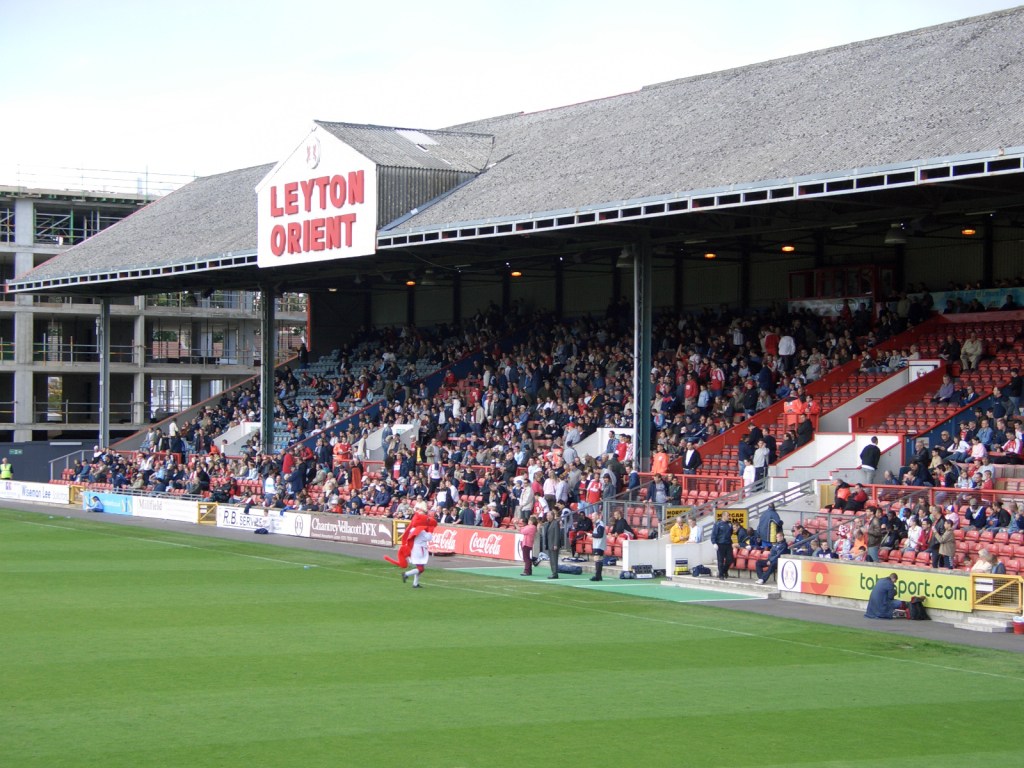
“It’s like music. You can’t dance to it if you don’t know what the rhythm is. If it keeps stopping and starting, and then it’s in three-four, and then four-four, and then the drummer stops and misses the beat – how do you even engage with that?”
For Leyton Orient fans like Aynsley Taylor, the club’s stop-start season has been just that—disjointed, out of tune, and leaving fans struggling to stay in step.
Football, particularly at the League One level, thrives on a predictable cadence: Saturday at 3pm, week in, week out. It’s the metronome of a fan’s week, a sacred tradition. But this season, that rhythm has been broken.
By the turn of the year, Orient will have only had three league games at Brisbane Road at 3pm kick-offs this season.
Postponements due to international call-ups have seen three weekend home matches moved to midweek, while two other Saturday games have had their kick-off times moved for Sky Sports coverage – disrupting fans’ routines, hitting attendance figures, and, many believe, negatively affecting the team’s performances.
Combined with rising ticket prices, poor form on the pitch, and a growing sense of disconnection between the club and its community, the season has become a “perfect storm” of discontent.
For Taylor, editor of the fanzine Leyton Orientear and a season ticket holder, the disruptions have been profound.
“Saturday at 3 o’clock is the epicentre of the working week. It gives a rhythm to the season,” he explains. “Now it’s all over the place—three matches in a week, two weeks off. It’s affecting performances and attendances.”
Leyton Orient’s struggles at Brisbane Road have been evident this season, failing to win any of their first five league games at home. A 3-0 win against Blackpool last weekend, coinciding with a rare Saturday kickoff, offered a glimmer of hope, but Taylor sees the fixture chaos as a contributing factor to their poor form.
“You start building up decent form, and then you don’t have another game for two weeks,” he says. “Or, if you get a bad defeat, you want to put it right straight away—not wait two weeks.”
Attendance has dropped from an average of 8,361 last season to just 7,285 for the first six home matches this year and midweek matches, despite official figures, have visibly emptier stands.
“You can see it with your own eyes,” Taylor says. “The club claims the numbers are okay, but they’re clearly not.”
https://platform.twitter.com/widgets.jsBy the looks of it, about 4,000 Ryan Reynolds fans were so enraptured by what they saw on Saturday that they’ve come back tonight dressed as empty seats. https://t.co/ICvWnXy1wu
— (O) The Leyton Orientear (@leytonorientear) October 1, 2024
Herman Wang, who blogs about the club as ‘Leyton Laureate’, highlights the impact postponements have on families following the O’s.
“My boys have only been to two matches this season,” he says. “The Tuesday games don’t work—they’ve got school the next day. For them, it’s like Orient’s out of sight, out of mind.”
And Wang laments how midweek games sap the joy out of the matchday experience. “Tuesday nights, it’s dark and cold. People come straight from work, the stadium’s half-empty. Saturday matches feel like a festival—with your pre-match rituals, seeing family and friends. Tuesday nights don’t compare.”
Beyond Leyton Orient’s control, factors like international breaks, an expanded football calendar, and TV deals have added to the chaos.
But it reflects a wider problem within football. Competing governing bodies, each vying to make their competition the priority, have created an oversaturated calendar, and the growing demands of international football are now seeping into the lower divisions.
“There’s too much football,” Taylor says bluntly. “The Nations League is a complete waste of time—a load of glorified friendlies. I know we’ve been saying this for years, that we’re going to reach saturation point with people getting sick of it, but I think we might finally be there now.”
This saturation is all part of a shifting identity in lower-league football, changing how fans view the game.
Taylor adds: “One of the reasons we follow League One football is the tradition. You don’t get kickoff times messed about by broadcasters or matches postponed for international call-ups. It’s three o’clock Saturday, you go to the match. It’s about traditional values.”
Although Orient have been unlucky, with all three international breaks this season coinciding with home games, both Taylor and Wang believe the club could have been more proactive in recognising the issue and implementing measures to support fans.
Wang points out that financial realities in League One are shifting, with clubs like Wrexham and Birmingham City reshaping the league’s economics.
According to Wang, Leyton Orient officials estimate that each Saturday match moved to a Tuesday costs the club around £50,000 in lost revenue from tickets, food, and merchandise and for a team already struggling with financial sustainability, the knock-on effects could be severe.
The club has tried to soften the blow to fans, offering discounted tickets for the postponed fixture against Huddersfield, but Taylor isn’t convinced it’s enough.
“People are questioning whether they’ll renew their season tickets next year. If we have another season like this, it’s just not worth it.”
For Wang, Orient’s season has been “a perfect storm.” Ticket price hikes, fixture disruptions, and poor results leave the club at somewhat of an inflection point. “If they weren’t 20th in the table, some of the complaints might be quieter,” he admits. “But when the team’s not doing well and you’re playing in front of half-empty stadiums, it’s just not a good feeling.”
Taylor takes it a step further. “It’s been miserable, to be honest. Hard to enjoy, hard to engage with. And it’s not just me saying this—look at the crowds.”
For him the storm that Wang refers to has potentially serious consequences, alienating the clubs core supporters.
“I think the club fundamentally misunderstands the value of our offer. It has started to lose track of what the attraction, the appeal of Leyton Orient and League One football actually is.”
As the disjointed season plays on, fans like Taylor can only hope the rhythm is restored. After all, football—like music—needs a steady beat. Without it, the connection falters.
At Orient, the melody that brings people together risks being lost in the noise.

 HJC Journalism
