Toff times – Everton Women need resilience after a sticky start to season

Bottom of the table and winless in the Women’s Super League this season, Everton Women are enduring one of their most challenging starts in recent memory. Under the cloud of an impending takeover and plagued by injuries, the Toffees have struggled to keep pace with their rivals.

Yet despite the adversity, manager Brian Sorensen remains defiant, pointing to his team’s character and resilience as they battle against both their opponents and the difficult circumstances surrounding the club.

Speaking after their 1-1 draw against Crystal Palace on Sunday, Sorensen reflected on a performance that highlighted Everton’s resilience, even if it fell short of the three points they crave.

“We started really bad,” he admitted, referencing the early complacency that led to Palace’s opener after just 24 seconds. 

“The plan was to be more positive, try to get in behind, but in the first couple of minutes we played backwards, gave the ball away, and they scored. So it was a super tough start.”

The shaky opening encapsulated Everton’s season so far – a team playing under pressure, scrambling for points while grappling with injuries and a lack of depth. 

Sorensen’s tactical shift in the second half, where Everton adopted a more direct approach, eventually paid off, allowing them to create more chances and ultimately find an equaliser through Honoka Hayashi. 

“When we finally got it in, it was good,” he said. His emotive reaction on the sideline spoke volumes about the relief of a positive moment amidst a difficult campaign.

Injuries have been a constant thorn in Everton’s side this season, limiting Sorensen’s options and leaving the squad stretched thin. Key players have been sidelined, including long-term injuries to Aurora Galli, Elise Stenevik, and summer signing Inma Gabarro. 

Sorensen added, “Inma is our magic player who we rely on to create a lot for us, so it is really tough.

“Morale amongst the girls is good, but of course, when we are losing key players week after week, it’s tough.”

The mounting injury list not only affected Everton’s results but also highlighted the squad’s depth issues, a recurring topic among fans who have criticised the club’s lack of investment in recent years.

With limited resources, Everton are struggling to compete financially with the league’s top sides, but there is hope that prospective new owners, The Friedkin Group, will invest more into the women’s side as they have done at their other club, Roma.

“You can always start blaming everything else, but we need to look inside and think about the things we can control, which is our performance, and we did that in the second half, I feel,” Sorensen reflected after the Palace game.

For Sorensen, the struggles on the field are compounded by what he describes as unnecessary ‘noise’ in the media about the team’s position.

“I don’t know why there is so much noise about us at the minute. We have played three of the usual top four teams in our opening six games, so it hasn’t been ‘bad’ bad,” he said, defending his players’ efforts. 

“Performance wise, we have been okay, but we just haven’t had the results that we maybe deserve.”

The takeover saga has undoubtedly impacted the squad’s morale and depth. As fans and players await The Friedkin Group’s investment to officially transfer control of the club, Everton’s women’s team faces a spending crunch that limits their options in the transfer market. 

But there might be a need for immediate investment in recruitment in order for the team to strengthen in the January window if they are to avoid relegation.

Sorensen has spoken previously about losing out on key transfers in the Japanese market due to competition from wealthier clubs, and the sale of highly rated Sweden midfielder Hanna Bennison to Juventus all serve as reminders of the clubs ongoing financial struggles. Even a pre-season trip to Australia was scrapped over logistics.

While off-field struggles continue, Sorensen’s challenge is to make the most of his current squad. He has had to rely on young players out of position and academy players being promoted into the first team. 

Sorensen’s emphasis on resilience may not be a complete solution, but it is a source of pride as the squad deals with adversity. Although as the saying goes, when it rains, it pours, and problems were compounded by short-term absentees at the weekend.

“Yeah, the girls have shown great strength of character, especially after losing Lucy Hope to fever yesterday and just before the game, and had to change things up again,” Sorensen remarked. “Not ideal, but that is how football is and we just have to deal with it.”

Looking ahead, there are reasons for Everton fans to hold onto hope. The Friedkin Group’s takeover is expected to conclude by the end of the year, and with it, there are plans to allow the women’s team to play some matches at the soon to be finished Bramley-Moore Dock stadium.

While Sorensen knows that improved investment is crucial, he remains focused on getting the best out of his players under difficult circumstances.

“We need to get more points,” Sorensen admitted. A simple goal that remains elusive yet within reach if the resilience of his players translates into results on the pitch.
The rise of Ross Vintcent, from sevens in Dubai’s to the Azzurri blue – Written for SportsBEAT

Ross Vintcent’s rugby journey has been anything but conventional. 

Born in Johannesburg, raised in Dubai, and now representing Italy on the international stage, the Exeter Chiefs’ flanker embodies adaptability. 

At just 22, Vintcent’s winding path through rugby has led him to establishing himself as a key player for the Chiefs, having played every minute of their 2024/25 Premiership campaign thus far. 

His latest challenge in his rapid rise, comes in Italy’s Autumn Internationals against Argentina, Georgia, and New Zealand, after confirmation of his inclusion in the squad last week.

“Rugby’s always been central to my family,” Vintcent recalled. 

“My dad bought me a small rugby ball, and I just, fell in love with the game.”

After his family moved to Dubai for his father’s job, Vintcent indulged his passion for rugby through a local club where he spent nine years as a schoolboy before strengthening his rugby foundations in South Africa, where he attended boarding school.

The transition to Italy came as a surprise opportunity during his gap year, following canceled school games in 2020 due to the COVID-19 pandemic. 

At the age of 18, with an invitation from the Italian squad, Vintcent chose to put his studies on hold and make the move, committing to his long-term rugby aspirations. 

He said: “I was always going to play rugby, I was just sort of deciding where I would stay, because I wanted to do my studies. 

“I wanted to get my degree whilst playing rugby. But then this offer came up, and it was seemed like a really good idea to just play some rugby.

“I didn’t have any expectations. I knew that there was a Six Nations that year. What they had said is that it was unlikely that I would be a part of that squad, because I’d come so late, but there were a few injuries, and luckily, I was called up.”

Since then, he’s been a standout performer, rising from the under-20s to his debut in the Six Nations in 2024 and now a key pick for Italy’s Autumn Internationals.

Vintcent’s arrival in Italy marked a profound shift for him, and whilst it was an opportunity he couldn’t refuse, it wasn’t without its challenges. 

“I was kind of thrown into the deep end into a room with two other Italians, I guess I was forced to learn the language.

“It was difficult at first, but I had friends who helped,” Vintcent said. 

“Being thrown into a foreign country taught me resilience.” 

The experience, he noted, expanded his approach to the game, learning from Italy’s pride and team focused mentality. 

He said: “When the boys put on that jersey, it triggers an emotion you can’t describe.

“Playing for your country, they don’t take it lightly here.”

If Vincent’s rugby heritage wasn’t unique enough, his journey through playing in a range of positions is also something that has helped forge his unique attributes. 

“So this is going to sound a bit strange but actually, I used to be a scrum half. Prepubescent me was a scrum half and I was the smallest guy on every field and my idol used to be Francois Hougaard the Springbok scrum half,” Vintcent said.

But in 2020, after his school coach suggested a change to the back row, Vintcent found his strongest position and has never looked back since. 

He credits his background in Dubai’s sevens circuit for sharpening his ball-handling and footwork, skills that have translated well to his flanker role. 

He explained: “Sevens is quite big in Dubai. There weren’t many schools to play against, but we traveled a lot, even toured the UK, playing at Roslyn Park which was amazing experience playing against some of the best sides.

As he looks forward to representing Italy, Vintcent has his sights set on balancing his degree and his rugby career. 

After spending some time playinf with Zebre in Italy, he made the decision to move to the UK and opted to Study Economics at the University of Exeter, where he quickly established himself as an Exeter Chiefs regular where he has just signed a new contract in May. 

“I wanted to get my degree while playing rugby,” he said, seeing education as a ‘Plan B’ that, like his rugby career, brings stability and discipline to his life.

For Vintcent, wearing the Italian jersey the culmination of a journey that has taken him from a small club in Dubai to competing amongst Europe’s best. 

“All these rugby experiences, across different countries and cultures, have shaped me as a player,” he reflects. 

“I know being able to adapt to different cultures as well has definitely helped along the way and has helped with my mindset towards rugby. 

“I guess the Italy experience has been a real eye opener, being thrown into a foreign country, and, you know, there were times I was obviously homesick and like wanting to come home and missing my family and stuff, but I think being able to push through that has taught me a lot about myself and and resilience, which has definitely come in handy on the rugby field.

And now, with his international career on the rise, Vintcent’s journey continues as he steps into Italy’s Autumn Internationals, ready to make an impact.

A look ahead to the WTA Finals, the latest chapter of the Saudi sportswashing debate

The WTA Tour Finals land in Saudi Arabia next week, where homosexuality is criminalised, following guidance from organisers advising players to express support for the event’s location.

The tournament in Riyadh is the latest to face scrutiny over Saudi sportswashing, with the WTA anticipating tough questions about the Kingdom’s human rights record. 

Players were advised in an October meeting: “Consider saying, ‘I’m happy to play wherever the WTA Finals is hosted; it’s a prestigious event.’”

With a record $15 million prize fund, the largest in the tournament’s history, former world number one Garbiñe Muguruza is serving as tournament director and hopes the event will leave a lasting impact. 

She said: “We want to have stability.

“The WTA Finals is the last diamond of the year, where the best of the best has to be there and perform.”

Muguruza’s remarks come after the 2023 Finals in Cancun descended into chaos, with rain pouring into a temporary outdoor stadium set up in a car park. 

In contrast, Saudi Arabia promises luxury accommodation and high-quality facilities, hosting the event at a 5,000-seat stadium at King Saud University.

Yet questions persist amid accusations that Saudi Arabia is using sporting events to veneer its human rights record, especially given the WTA’s values of inclusivity. 

Muguruza noted: “All the players have asked many questions. 

“Will we be welcome? How are we going to be treated? Is everyone welcome, including people in the LGBTQ community?”

She reassured players that in her visits to the country she saw women in upper management roles and feels confident everything will be normal.

Previous WTA events in the Middle East, such as those in the UAE, have struggled to attract large crowds, contrasting with the atmosphere Muguruza experienced in Guadalajara in 2021, where she won the finals. 

This disparity raises more questions about Saudi Arabia as a host, with Muguruza aware that crowd engagement could make or break the event. 

Reflecting on Guadalajara, she added, “Having the stadium full almost every session and having the crowd involved, I think was the key.”

For Aryna Sabalenka, Iga Swiatek, Coco Gauff, Jasmine Paolini, Elena Rybakina, Jessica Pegula, Zheng Qinwen, or Barbora Krejcikova, an undefeated run in Riyadh means a record breaking $5 million payout, surpassing any Grand Slam. 

With high stakes and global scrutiny, the stage is set for a WTA Finals like no other.

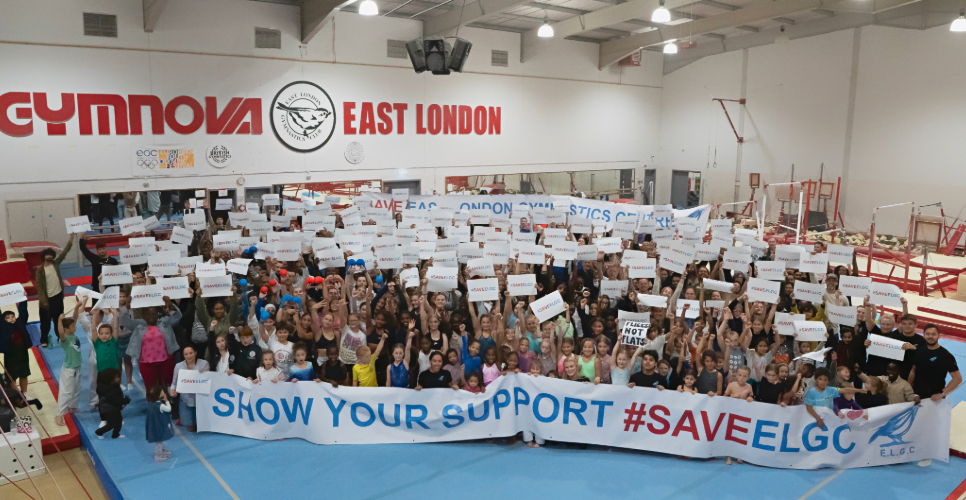
East London Gymnastics Centre that has trained Olympians faces closure

The East London Gymnastics Centre (ELGC) is facing closure due to housing development plans, putting the future of elite and community gymnastics at risk.

Since freeholders sold the site to housing development group Galliard Homes, ELGC managers Alex Jerrom and Kirk Zammit fear they will be replaced by tenants who can afford higher rates.

They have launched a petition as they look to secure the future of the gym which has trained some of the top gymnasts in the country, including Paris 2024 athlete Georgia Mae Fenton.

The fate of the ELGC has come under threat after the site it is on was bought by Galliard Homes.

Once a deal was made, ELGC was assured they could negotiate their tenancy with the new owners.

Jerrom said: “They simply replied that the redevelopment was no longer viable, and that was it.

“Later, they called to say they would keep the site for leisure, but we wondered why we hadn’t received an offer to stay.”

In response, Galliard Homes claimed to be committed to retaining the building and ensuring its financial viability.

They said: “We have secured a new tenant who will bring significant health and social benefits to the community.”

Despite Zammit and Jerrom’s concerns about poor communication, Galliard Homes disputes their claims.

Galliard Homes added: “Since agreeing to purchase the site, we have kept existing tenants informed of our plans, including the decision not to move forward with a residential-led development.”

Opened in 1998 with National Lottery Funding, ELGC in Beckton has long been a cornerstone of the gymnastics community.

Jerrom and Zammit have operated the club as a non-profit charity since 2015 and take pride in its contributions to elite gymnastics.

Zammit said: “There is so much history at this club, even before this place was built, we’ve had multiple British champions and GB team members competing at Worlds and Euros.”

Zammit described the club as a hub of London regional gymnastics. 

He said: “We currently have two girls on the GB team and another on the Polish national team.

“Next year, we are likely to have three more girls join the GB team, more than anyone else in Greater London.

“Without this facility, future Olympians won’t have anywhere to train.”

Beyond gymnastics, the centre impacts the broader community by supporting various groups and businesses, including a circus school.

Despite the progress of the ELGC, the prospect of closure is becoming increasingly likely.

Jerrom said: “There’s no other facility that’s affordable and large enough for us to move into, so we will be forced to close the club down.”

They worry that in a low-income area like Newham, the changes brought by developers are part of a trend of closures.

Zammit added: “In Newham, there used to be four leisure centres, but two are closed, and one is soon to close.

“Soon, there will be one leisure centre in the entire borough.”

Many similar spaces have already been lost, including The Hub, a vital dance space, Overgravity, a tricking gym in Bow, and Parkour Generations Chainstore, significantly impacting arts and sports communities.

There are also concerns that new tenants will not maintain the community impact of ELGC, with fears that developers will favour economic gains over engagement.

Jerrom said: “They’re likely to bring in something like a fitness gym or a bowling alley.

“Leisure is such a broad category that it won’t be a community centre or hub, and it won’t foster social interactions.

“The friendships and lifelong connections built here are invaluable.”

Beyond elite sports, the gym serves as a sanctuary for community members who benefit from its positive impact on well-being.

Zammit added: “Many people come here for help with their mental health, social anxiety, and self-confidence.”

This motivation drove Zammit to take over the East London Gymnastics Centre.

He reflected: “My life would have been completely different without sport giving me focus.

“I grew up in a rough area of East London, and the old East London club was where I first trained.

“I know what these kids are putting into their sport, and they need support.

“When my Mum couldn’t afford to get me to the gym, people made sure I could continue training because of their passion for the sport, and that’s why this is so important.”

Determined to fight the closure, Zammit and Jerrom have launched the SAVE ELGC Campaign.

James Asser, MP for West Ham & Beckton said: “I am truly saddened to hear of the risk of closure faced by ELGC.

“Having visited the facility I can see that it is an invaluable asset for not only those in the Beckton community, but for everyone who is passionate about elite sport across London and nationally, having trained some of our Team GB athletes.

“Losing such a resource would be a tragedy for the individuals who train at and are supported by the centre, and I will work with all those involved to insure it remains as an invaluable part of my community.”

Featured image provided by ELGC – permission to use

Team GB Rowing nomination for SJA Team of the Year

Team GB’s Olympic Rowing Team delivered a performance in Paris that will be remembered as one of the finest in British Olympic history. Winning medals in 8 out of 14 races – including 3 gold, 2 silver, and 3 bronze, they were standout performers of the Games.

After the disappointment and inquests that followed Tokyo’s 2022 regatta, they reclaimed their place among the world’s elite. Their resilience, teamwork, and determination make them clear contenders for the Sports Journalist Association’s Team of the Year award.

Paris was a story of redemption and resurgence for British rowing after the frustrations of Tokyo 2022, where Team GB won no golds and no women made the podium.

No one embodied this more than Emily Craig and Imogen Grant, whose lightweight women’s double sculls win was a regatta highlight. Missing out on an Olympic medal by 0.01 seconds in Tokyo, their gold in Paris was poetic justice. Leading from start to finish, they etched their names as eternal champions, claiming victory in the final renewal of this event.

The women’s quadruple sculls of Lauren Henry, Hannah Scott, Lola Anderson, and Georgina Brayshaw also stormed to gold, wiping the memories of Tokyo’s struggles. Their breathtaking final stroke sealed the first-ever British victory in the event, proving British rowing had rediscovered its elite status.

It wasn’t just about gold. Helen Glover, already a two-time Olympic champion and mother, returned to claim silver in the women’s four alongside Esme Booth, Sam Redgrave, and Rebecca Shorten. Their race came down to a bowball, finishing second to the Dutch, marking the first-ever podium finish for Britain in the women’s coxless four.

For the men’s pair, Tom George and Oliver Wynne-Griffith, silver was bittersweet. They rowed with heart but were outmatched by Croatia’s dominant Sinkovic brothers, who claimed their third consecutive Olympic title. Despite this, the British pair delivered their best performance of the Olympic cycle.

The climax of the regatta came with the eights. The women’s eight, bronze medalists after finishing last in Tokyo, showed they belong at the top of the sport. The men’s eight brought the regatta to an triumphant close with gold, embodying the power, precision, and perseverance that define this team.

Behind these athletes stands Louise Kingsley, the first female performance director of the Olympic programme. Taking over after Tokyo, she led a team that prepared more athletes across more boat classes than ever before, delivering extraordinary results. 

Peaking at the Olympics requires technique, power, pacing, and, above all, belief. Kingsley and her coaching team created that synergy across the board and the achievements of the team are remarkable. 

The changing face of Leyton Orient: Are ticket prices symbolic of a shift in the clubs identity?

Orient’s fixture against Peterborough on Tuesday night had one of the lowest attendances of recent years

There’s something unmistakably nostalgic about a matchday at Leyton Orient. In East London, this club has long been a cornerstone for its community. But in recent times, some fans feel that sense of belonging has been tested, with a new commercial approach being pushed by the owners.

Leyton Orient fans are now paying up to £37 per match—a price that places them among the most expensive in League One. While the club has had a mixed start to their 24/25 campaign, performances have been promising. Off the pitch, concerns are growing about what rising ticket prices might mean for the future.

“I understand prices are going to go up given the circumstances at the minute, but £32-35 is a bit much for League One,” Rob, a season ticket holder, lamented, standing outside the Gaughan Group Stadium before Tuesday nights fixture against Peterborough.

For many, it’s not just the price itself that’s an issue, but the new categorisation of games—each fixture now labeled as AA, A, or B, determining how much fans will have to shell out. For this Saturday’s upcoming game against Wrexham classified as an AA fixture, non-concession adult tickets range between £33-37, leaving some to question the fairness of it all.

It is worth noting – Saturdays fixture is a sell out at Brisbane Road.

Darren, a devoted fan since 1986, makes a long trip from Bedfordshire to attend games. The categorisation, he said, feels like another symptom of a larger issue filtering into the lower leagues: “I know it’s been in the Premiership for some time, but now it’s coming down into the lower leagues it feels a little bit different and wrong… Dealing with the cost of living crisis and things like that as well.”

This “Premier League” approach to pricing has left some fans wondering if their club is moving away from its roots that have long been grounded in being accessible and community driven.

Tom Davies, the vice chair of Leyton Orient Fans’ Trust (LOFT), described a growing unease among supporters: “The concern as an Orient fan is we’ve traditionally sold ourselves as a club that’s accessible and cheaper than West Ham, Spurs, and Arsenal, which are obviously the clubs surrounding us. If we start to go down the same path that Premier League clubs are going down, we’re kind of losing some of our goodwill and accessibility.”

The club’s new strategy, for better or worse, is all about commercialisation, a trend sweeping through football, and one that some in the fanbase are embracing.

“There are younger fans, who’ve known nothing but success over the past few years, who hear these ideas advanced about the likes of a new stadium and Championship football, and ‘we can do what Brentford did,’” said Aynsley Taylor, editor of the fan-produced magazine Orientear. “They think, yeah, I want that, I want more of that.”

Yet for some long-standing fans, the changes can feel disheartening, as the club moves from the close-knit atmosphere of yesteryears to something more corporate. “The club is changing and is going through a transition,” he added, “and it is possible that it will become a less intimate, personal, communitarian sort of place.”

The move towards higher ticket prices doesn’t affect season ticket holders quite so much, but for casual supporters in the community there are concerns about affordability. The areas of Leyton and Walthamstow have changed significantly in recent years, experiencing gentrification, but Davies notes that there are still many who find it hard to afford these new prices.

He said: “I know Leyton and Walthamstow have gentrified a bit in recent years, but they’re still quite poor areas in lots of pockets and the prices make Orient less of an accessible community attraction.”

As prices go up, there’s a fear that attendances could start to drop. Tuesday night’s game against Peterborough saw a turnout of 6,416 – below the season average of 7,419. For Taylor, this is cause for concern. “By recent standards, that’s one of the lowest of the past two or three years, and I think that’s setting a few alarm bells ringing at the club, and it should do.”

Ticket in the South Stand for Orient’s category A fixture on Tuesday night

While the board’s direction isn’t a mistake, it’s a reflection of a broader industry shift. Clubs, especially those eyeing higher leagues and financial sustainability, are increasingly pushing toward commercialisation. 

Taylor points towards this: “It’s an industry-wide issue at the moment. The regulator is coming, and we don’t know exactly how long, but it is coming. And clubs are starting to realise that there is going to be change.”

He adds that there’s a rush among football club chairmen to secure as much financial gain as possible before the regulator comes in: “My supposition is that there’s a bit of a mad trolley dash going on right now before that happens.”

For Davies, much of this comes down to the influence of U.S.-style business models, which he believes are influencing the current philosophy at Leyton Orient under chairman Nigel Travis. “The owner is a local lad but his business career has been based in the U.S. and I think what we’ve seen with U.S. owners is they think football is undervalued and have a quite rapacious view of it all.”

Davies added, “Travis comes a little bit from that culture where they think if some people are prepared to spend money, then we’re going to charge it.”

Taylor reflected that this relentless commercial focus is visible across the whole club “Everything about the club this season has been in your face. Sell, sell, sell. Marketing. Sell this, sponsor that. And it’s just relentless, it’s tiring.”

But despite the frustrations, Leyton Orient remains a beloved institution. And as Taylor reflected on what drew him to the club in the first place, he captures what many fans fear might slip away: “It triggered something deep within my subconscious about what football is about. It’s not about big, sterile, impersonal, massive crowds and everybody’s just a commodity and it’s expensive and glamorous and TV and all the rest of it. In a part of London which has gone through a lot of change over the past few decades, it was like this one thing which provided stability in a very transient area.”

Leyton Orient face a delicate balancing act – the pursuit of financial gains in a competitive football league at the potential cost of losing what sets it apart from its larger, wealthier neighbours.

Whilst many fans are not hugely impacted by high ticket prices, especially the loyal season ticket holders who in fairness do get good value – many of the fans I spoke to feel that the issue is more symbolic of wider changes at the club and a changing approach to the pursuit of progress in difficult circumstances. The question remains, how much further can they push before the connection is lost?