Fixture chaos leaves Leyton Orient out of sync

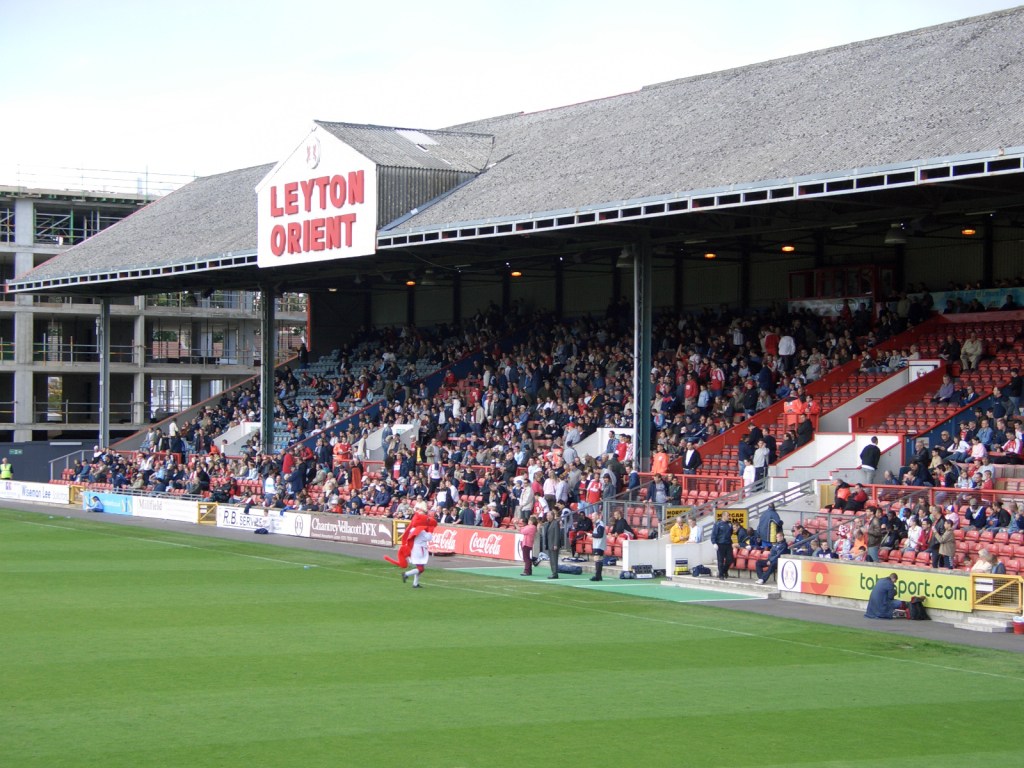
The East Stand at Brisbane Road, captured by Martin Belam in 2005. Licensed under Creative Commons Attribution-Share Alike 2.0 Generic. Source: Wikimedia Commons.

“It’s like music. You can’t dance to it if you don’t know what the rhythm is. If it keeps stopping and starting, and then it’s in three-four, and then four-four, and then the drummer stops and misses the beat – how do you even engage with that?”

For Leyton Orient fans like Aynsley Taylor, the club’s stop-start season has been just that—disjointed, out of tune, and leaving fans struggling to stay in step. 

Football, particularly at the League One level, thrives on a predictable cadence: Saturday at 3pm, week in, week out. It’s the metronome of a fan’s week, a sacred tradition. But this season, that rhythm has been broken.

By the turn of the year, Orient will have only had three league games at Brisbane Road at 3pm kick-offs this season.

Postponements due to international call-ups have seen three weekend home matches moved to midweek, while two other Saturday games have had their kick-off times moved for Sky Sports coverage – disrupting fans’ routines, hitting attendance figures, and, many believe, negatively affecting the team’s performances. 

Combined with rising ticket prices, poor form on the pitch, and a growing sense of disconnection between the club and its community, the season has become a “perfect storm” of discontent.

For Taylor, editor of the fanzine Leyton Orientear and a season ticket holder, the disruptions have been profound. 

“Saturday at 3 o’clock is the epicentre of the working week. It gives a rhythm to the season,” he explains. “Now it’s all over the place—three matches in a week, two weeks off. It’s affecting performances and attendances.”

Leyton Orient’s struggles at Brisbane Road have been evident this season, failing to win any of their first five league games at home. A 3-0 win against Blackpool last weekend, coinciding with a rare Saturday kickoff, offered a glimmer of hope, but Taylor sees the fixture chaos as a contributing factor to their poor form. 

“You start building up decent form, and then you don’t have another game for two weeks,” he says. “Or, if you get a bad defeat, you want to put it right straight away—not wait two weeks.”

Attendance has dropped from an average of 8,361 last season to just 7,285 for the first six home matches this year and midweek matches, despite official figures, have visibly emptier stands. 

“You can see it with your own eyes,” Taylor says. “The club claims the numbers are okay, but they’re clearly not.”

https://platform.twitter.com/widgets.js

Herman Wang, who blogs about the club as ‘Leyton Laureate’, highlights the impact postponements have on families following the O’s. 

“My boys have only been to two matches this season,” he says. “The Tuesday games don’t work—they’ve got school the next day. For them, it’s like Orient’s out of sight, out of mind.”

And Wang laments how midweek games sap the joy out of the matchday experience. “Tuesday nights, it’s dark and cold. People come straight from work, the stadium’s half-empty. Saturday matches feel like a festival—with your pre-match rituals, seeing family and friends. Tuesday nights don’t compare.”

Beyond Leyton Orient’s control, factors like international breaks, an expanded football calendar, and TV deals have added to the chaos. 

But it reflects a wider problem within football. Competing governing bodies, each vying to make their competition the priority, have created an oversaturated calendar, and the growing demands of international football are now seeping into the lower divisions. 

“There’s too much football,” Taylor says bluntly. “The Nations League is a complete waste of time—a load of glorified friendlies. I know we’ve been saying this for years, that we’re going to reach saturation point with people getting sick of it, but I think we might finally be there now.”

This saturation is all part of a shifting identity in lower-league football, changing how fans view the game. 

Taylor adds: “One of the reasons we follow League One football is the tradition. You don’t get kickoff times messed about by broadcasters or matches postponed for international call-ups. It’s three o’clock Saturday, you go to the match. It’s about traditional values.”

Although Orient have been unlucky, with all three international breaks this season coinciding with home games, both Taylor and Wang believe the club could have been more proactive in recognising the issue and implementing measures to support fans. 

Wang points out that financial realities in League One are shifting, with clubs like Wrexham and Birmingham City reshaping the league’s economics.

According to Wang, Leyton Orient officials estimate that each Saturday match moved to a Tuesday costs the club around £50,000 in lost revenue from tickets, food, and merchandise and for a team already struggling with financial sustainability, the knock-on effects could be severe. 

The club has tried to soften the blow to fans, offering discounted tickets for the postponed fixture against Huddersfield, but Taylor isn’t convinced it’s enough. 

“People are questioning whether they’ll renew their season tickets next year. If we have another season like this, it’s just not worth it.”

For Wang, Orient’s season has been “a perfect storm.” Ticket price hikes, fixture disruptions, and poor results leave the club at somewhat of an inflection point. “If they weren’t 20th in the table, some of the complaints might be quieter,” he admits. “But when the team’s not doing well and you’re playing in front of half-empty stadiums, it’s just not a good feeling.”

Taylor takes it a step further. “It’s been miserable, to be honest. Hard to enjoy, hard to engage with. And it’s not just me saying this—look at the crowds.” 

For him the storm that Wang refers to has potentially serious consequences, alienating the clubs core supporters.

“I think the club fundamentally misunderstands the value of our offer. It has started to lose track of what the attraction, the appeal of Leyton Orient and League One football actually is.”

As the disjointed season plays on, fans like Taylor can only hope the rhythm is restored. After all, football—like music—needs a steady beat. Without it, the connection falters. 

At Orient, the melody that brings people together risks being lost in the noise.

The changing face of Leyton Orient: Are ticket prices symbolic of a shift in the clubs identity?

Orient’s fixture against Peterborough on Tuesday night had one of the lowest attendances of recent years

There’s something unmistakably nostalgic about a matchday at Leyton Orient. In East London, this club has long been a cornerstone for its community. But in recent times, some fans feel that sense of belonging has been tested, with a new commercial approach being pushed by the owners.

Leyton Orient fans are now paying up to £37 per match—a price that places them among the most expensive in League One. While the club has had a mixed start to their 24/25 campaign, performances have been promising. Off the pitch, concerns are growing about what rising ticket prices might mean for the future.

“I understand prices are going to go up given the circumstances at the minute, but £32-35 is a bit much for League One,” Rob, a season ticket holder, lamented, standing outside the Gaughan Group Stadium before Tuesday nights fixture against Peterborough.

For many, it’s not just the price itself that’s an issue, but the new categorisation of games—each fixture now labeled as AA, A, or B, determining how much fans will have to shell out. For this Saturday’s upcoming game against Wrexham classified as an AA fixture, non-concession adult tickets range between £33-37, leaving some to question the fairness of it all.

It is worth noting – Saturdays fixture is a sell out at Brisbane Road.

Darren, a devoted fan since 1986, makes a long trip from Bedfordshire to attend games. The categorisation, he said, feels like another symptom of a larger issue filtering into the lower leagues: “I know it’s been in the Premiership for some time, but now it’s coming down into the lower leagues it feels a little bit different and wrong… Dealing with the cost of living crisis and things like that as well.”

This “Premier League” approach to pricing has left some fans wondering if their club is moving away from its roots that have long been grounded in being accessible and community driven.

Tom Davies, the vice chair of Leyton Orient Fans’ Trust (LOFT), described a growing unease among supporters: “The concern as an Orient fan is we’ve traditionally sold ourselves as a club that’s accessible and cheaper than West Ham, Spurs, and Arsenal, which are obviously the clubs surrounding us. If we start to go down the same path that Premier League clubs are going down, we’re kind of losing some of our goodwill and accessibility.”

The club’s new strategy, for better or worse, is all about commercialisation, a trend sweeping through football, and one that some in the fanbase are embracing.

“There are younger fans, who’ve known nothing but success over the past few years, who hear these ideas advanced about the likes of a new stadium and Championship football, and ‘we can do what Brentford did,’” said Aynsley Taylor, editor of the fan-produced magazine Orientear. “They think, yeah, I want that, I want more of that.”

Yet for some long-standing fans, the changes can feel disheartening, as the club moves from the close-knit atmosphere of yesteryears to something more corporate. “The club is changing and is going through a transition,” he added, “and it is possible that it will become a less intimate, personal, communitarian sort of place.”

The move towards higher ticket prices doesn’t affect season ticket holders quite so much, but for casual supporters in the community there are concerns about affordability. The areas of Leyton and Walthamstow have changed significantly in recent years, experiencing gentrification, but Davies notes that there are still many who find it hard to afford these new prices.

He said: “I know Leyton and Walthamstow have gentrified a bit in recent years, but they’re still quite poor areas in lots of pockets and the prices make Orient less of an accessible community attraction.”

As prices go up, there’s a fear that attendances could start to drop. Tuesday night’s game against Peterborough saw a turnout of 6,416 – below the season average of 7,419. For Taylor, this is cause for concern. “By recent standards, that’s one of the lowest of the past two or three years, and I think that’s setting a few alarm bells ringing at the club, and it should do.”

Ticket in the South Stand for Orient’s category A fixture on Tuesday night

While the board’s direction isn’t a mistake, it’s a reflection of a broader industry shift. Clubs, especially those eyeing higher leagues and financial sustainability, are increasingly pushing toward commercialisation. 

Taylor points towards this: “It’s an industry-wide issue at the moment. The regulator is coming, and we don’t know exactly how long, but it is coming. And clubs are starting to realise that there is going to be change.”

He adds that there’s a rush among football club chairmen to secure as much financial gain as possible before the regulator comes in: “My supposition is that there’s a bit of a mad trolley dash going on right now before that happens.”

For Davies, much of this comes down to the influence of U.S.-style business models, which he believes are influencing the current philosophy at Leyton Orient under chairman Nigel Travis. “The owner is a local lad but his business career has been based in the U.S. and I think what we’ve seen with U.S. owners is they think football is undervalued and have a quite rapacious view of it all.”

Davies added, “Travis comes a little bit from that culture where they think if some people are prepared to spend money, then we’re going to charge it.”

Taylor reflected that this relentless commercial focus is visible across the whole club “Everything about the club this season has been in your face. Sell, sell, sell. Marketing. Sell this, sponsor that. And it’s just relentless, it’s tiring.”

But despite the frustrations, Leyton Orient remains a beloved institution. And as Taylor reflected on what drew him to the club in the first place, he captures what many fans fear might slip away: “It triggered something deep within my subconscious about what football is about. It’s not about big, sterile, impersonal, massive crowds and everybody’s just a commodity and it’s expensive and glamorous and TV and all the rest of it. In a part of London which has gone through a lot of change over the past few decades, it was like this one thing which provided stability in a very transient area.”

Leyton Orient face a delicate balancing act – the pursuit of financial gains in a competitive football league at the potential cost of losing what sets it apart from its larger, wealthier neighbours.

Whilst many fans are not hugely impacted by high ticket prices, especially the loyal season ticket holders who in fairness do get good value – many of the fans I spoke to feel that the issue is more symbolic of wider changes at the club and a changing approach to the pursuit of progress in difficult circumstances. The question remains, how much further can they push before the connection is lost?