

The corner shop was once a place to grab a scratchcard, some crisps, and a pack of fags. But walk into an independent convenience store in East London today, and you’re more likely to be greeted by the sight of fresh artisan coffee, locally sourced sourdough, and stacked fresh produce.
While the lottery tickets and lager may still be there, they now sit alongside gluten-free brownies, kombucha, and vegan sausage rolls. It’s a far cry from the days of old, these shops have evolved into gourmet havens in a bid to compete with the growing competition in the convenience store industry.
The Association of Convenience Stores (ACS) 2024 Local Shop Report, has revealed that spending in the convenience retail sector reached a record £1 billion over the last year. Much of this growth comes from chain supermarkets aiming to tighten their grip on the local community shopping market.
In August, Waitrose announced plans for 100 more convenience stores whilst Morrisons are targeting a further 400 by 2025. This makes life challenging for independent shop owners, whose industry is now flooded with competitors with deep pockets.
Despite these challenges, the ACS report shows that 71% of convenience stores in the UK are still owned by independent retailers. Contrary to long-held predictions of their decline, they continue to survive and find unique ways to stay relevant.
Mehmet, 46, owner of VitaPure in Bethnal Green, said, “Big chains, they hold everything. Morrisons, Co-op, they make deals which mean I will only get three cases, and they’re gonna get a pallet, so they can sell cheaper.” Sahin, 40, owner of Greenwood Food & Wine in London Fields echoed this “I know friends who lost half of their business after a Tesco Express or Sainsbury’s Local opened nearby. Some of them even shut their shops,” emphasising the challenge local shop owners face in this newly competitive market.
For Mehmet and Sahin, leaning into the shifting culture of corner shops in East London has helped them gain a competitive edge, and it starts with offering the best products. Both spoke of their daily deliveries of top quality ingredients from local markets and their desire to position themselves as hubs for their local community – not just for convenience but for quality.
On the surface this seems like a byproduct of gentrification. Sahin, reflecting on his 21 years of shop ownership, explained, “As the people change, so do the products, of course.” However, he noted a deeper issue: the need to differentiate from the big chains to survive. Their mission, he said: “making sure that we have what they don’t, and having better quality to keep people coming back.”
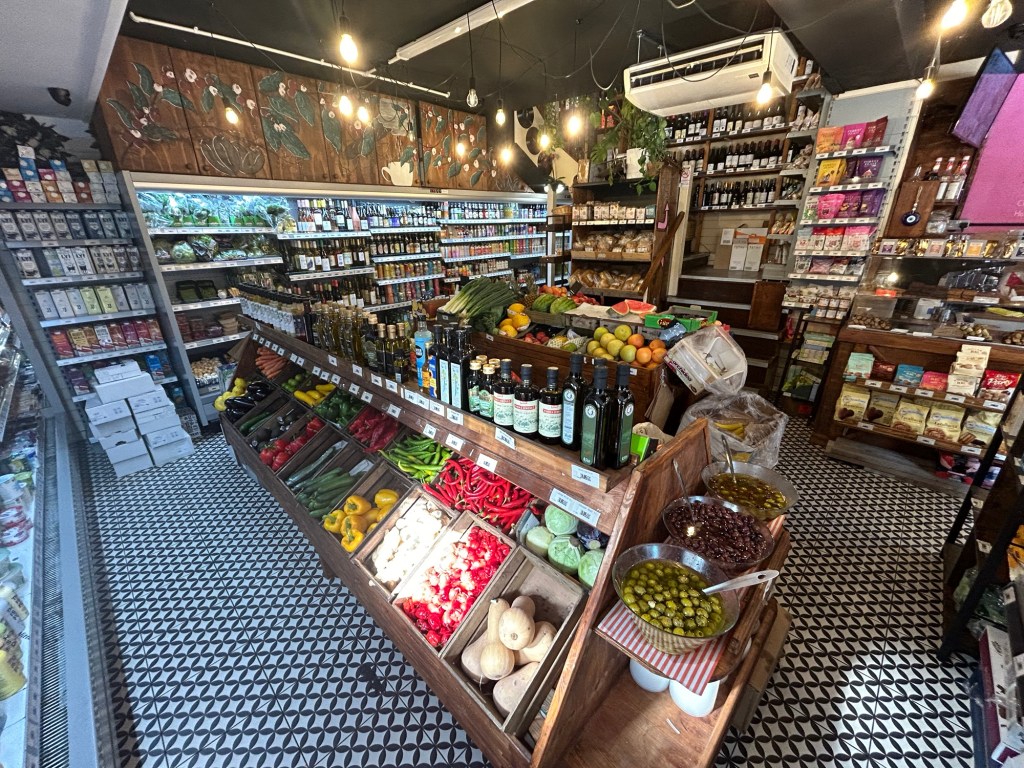
Diversifying services has been key to staying competitive. Mehmet’s shop is not just a grocery store – they sell high-quality takeaway coffees and a range of savoury Turkish pastries, including homemade borek and flatbreads. By the entrance, they’ve even set up a booth selling Hackney Gelato. “You can do your shopping and enjoy a nice flatbread or ice cream here – why not?” Mehmet said. “It’s all about making sure people can get something different in their local shop, which they can’t get at the supermarket chains.”

One aspect that makes convenience stores such a cornerstone of British society is their ability to offer personalised, intimate customer service. For Sahin and Mehmet, this is key. “If you go to Tesco and you’re short 1p, they’re not going to let you go,” Sahin remarked, highlighting how independent retailers can offer a more flexible, human shopping experience.
Mehmet even considers his customers as friends, noting how he orders ingredients on request for his regulars. He added: “In Tesco, you’re nothing.”
While the story of East London’s independent convenience stores is one of resilience and adaptability in a changing and challenging environment, there are still doubts ahead. Sahin recently installed a small café in Greenwood Food & Wine but is already worried about what he’ll need to spend on next to stay current. Most concerning for him is the rising cost of groceries, which gives chain convenience stores, able to buy in bulk, a significant advantage. “If I bought six tonnes of olive oil two years ago and kept it, I’d be a millionaire now,” he joked, alluding to the challenges of keeping prices competitive while dealing with soaring costs.
Yet Sahin remains undeterred. “I started working in this shop at 19, now I’m 40… I’ve seen rough Hackney and now trendy Hackney.” He isn’t going anywhere, and neither are East London’s independent convenience stores, which continue to find ways to embed themselves in the fabric of their communities.
 HJC Journalism