East London Gymnastics Centre that has trained Olympians faces closure

The East London Gymnastics Centre (ELGC) is facing closure due to housing development plans, putting the future of elite and community gymnastics at risk.
Since freeholders sold the site to housing development group Galliard Homes, ELGC managers Alex Jerrom and Kirk Zammit fear they will be replaced by tenants who can afford higher rates.

They have launched a petition as they look to secure the future of the gym which has trained some of the top gymnasts in the country, including Paris 2024 athlete Georgia Mae Fenton.

The fate of the ELGC has come under threat after the site it is on was bought by Galliard Homes.

Once a deal was made, ELGC was assured they could negotiate their tenancy with the new owners.

Jerrom said: “They simply replied that the redevelopment was no longer viable, and that was it.

“Later, they called to say they would keep the site for leisure, but we wondered why we hadn’t received an offer to stay.”

In response, Galliard Homes claimed to be committed to retaining the building and ensuring its financial viability.

They said: “We have secured a new tenant who will bring significant health and social benefits to the community.”

Despite Zammit and Jerrom’s concerns about poor communication, Galliard Homes disputes their claims.

Galliard Homes added: “Since agreeing to purchase the site, we have kept existing tenants informed of our plans, including the decision not to move forward with a residential-led development.”

Opened in 1998 with National Lottery Funding, ELGC in Beckton has long been a cornerstone of the gymnastics community.

Jerrom and Zammit have operated the club as a non-profit charity since 2015 and take pride in its contributions to elite gymnastics.

Zammit said: “There is so much history at this club, even before this place was built, we’ve had multiple British champions and GB team members competing at Worlds and Euros.”

Zammit described the club as a hub of London regional gymnastics. 

He said: “We currently have two girls on the GB team and another on the Polish national team.

“Next year, we are likely to have three more girls join the GB team, more than anyone else in Greater London.

“Without this facility, future Olympians won’t have anywhere to train.”

Beyond gymnastics, the centre impacts the broader community by supporting various groups and businesses, including a circus school.

Despite the progress of the ELGC, the prospect of closure is becoming increasingly likely.

Jerrom said: “There’s no other facility that’s affordable and large enough for us to move into, so we will be forced to close the club down.”

They worry that in a low-income area like Newham, the changes brought by developers are part of a trend of closures.

Zammit added: “In Newham, there used to be four leisure centres, but two are closed, and one is soon to close.

“Soon, there will be one leisure centre in the entire borough.”

Many similar spaces have already been lost, including The Hub, a vital dance space, Overgravity, a tricking gym in Bow, and Parkour Generations Chainstore, significantly impacting arts and sports communities.

There are also concerns that new tenants will not maintain the community impact of ELGC, with fears that developers will favour economic gains over engagement.

Jerrom said: “They’re likely to bring in something like a fitness gym or a bowling alley.

“Leisure is such a broad category that it won’t be a community centre or hub, and it won’t foster social interactions.

“The friendships and lifelong connections built here are invaluable.”

Beyond elite sports, the gym serves as a sanctuary for community members who benefit from its positive impact on well-being.

Zammit added: “Many people come here for help with their mental health, social anxiety, and self-confidence.”

This motivation drove Zammit to take over the East London Gymnastics Centre.

He reflected: “My life would have been completely different without sport giving me focus.

“I grew up in a rough area of East London, and the old East London club was where I first trained.

“I know what these kids are putting into their sport, and they need support.

“When my Mum couldn’t afford to get me to the gym, people made sure I could continue training because of their passion for the sport, and that’s why this is so important.”

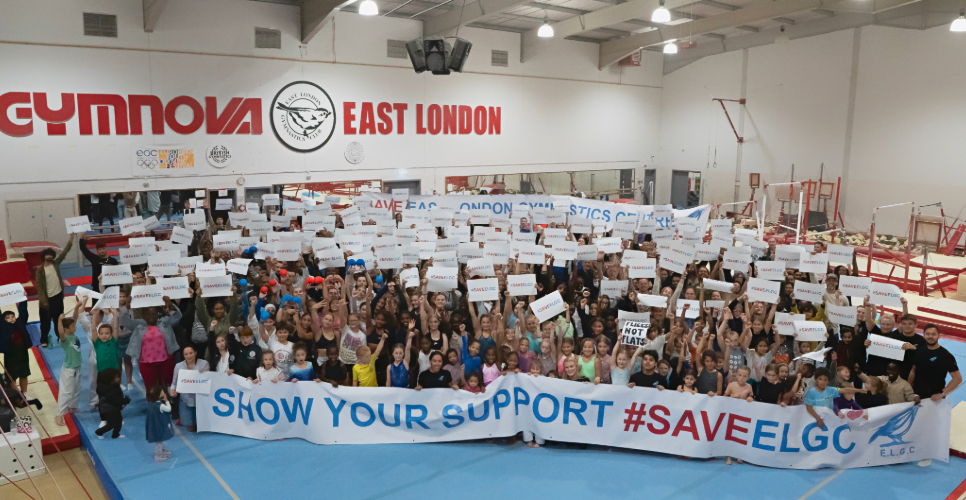
Determined to fight the closure, Zammit and Jerrom have launched the SAVE ELGC Campaign.

James Asser, MP for West Ham & Beckton said: “I am truly saddened to hear of the risk of closure faced by ELGC.

“Having visited the facility I can see that it is an invaluable asset for not only those in the Beckton community, but for everyone who is passionate about elite sport across London and nationally, having trained some of our Team GB athletes.

“Losing such a resource would be a tragedy for the individuals who train at and are supported by the centre, and I will work with all those involved to insure it remains as an invaluable part of my community.”

Featured image provided by ELGC – permission to use

The changing face of Leyton Orient: Are ticket prices symbolic of a shift in the clubs identity?

Orient’s fixture against Peterborough on Tuesday night had one of the lowest attendances of recent years

There’s something unmistakably nostalgic about a matchday at Leyton Orient. In East London, this club has long been a cornerstone for its community. But in recent times, some fans feel that sense of belonging has been tested, with a new commercial approach being pushed by the owners.

Leyton Orient fans are now paying up to £37 per match—a price that places them among the most expensive in League One. While the club has had a mixed start to their 24/25 campaign, performances have been promising. Off the pitch, concerns are growing about what rising ticket prices might mean for the future.

“I understand prices are going to go up given the circumstances at the minute, but £32-35 is a bit much for League One,” Rob, a season ticket holder, lamented, standing outside the Gaughan Group Stadium before Tuesday nights fixture against Peterborough.

For many, it’s not just the price itself that’s an issue, but the new categorisation of games—each fixture now labeled as AA, A, or B, determining how much fans will have to shell out. For this Saturday’s upcoming game against Wrexham classified as an AA fixture, non-concession adult tickets range between £33-37, leaving some to question the fairness of it all.

It is worth noting – Saturdays fixture is a sell out at Brisbane Road.

Darren, a devoted fan since 1986, makes a long trip from Bedfordshire to attend games. The categorisation, he said, feels like another symptom of a larger issue filtering into the lower leagues: “I know it’s been in the Premiership for some time, but now it’s coming down into the lower leagues it feels a little bit different and wrong… Dealing with the cost of living crisis and things like that as well.”

This “Premier League” approach to pricing has left some fans wondering if their club is moving away from its roots that have long been grounded in being accessible and community driven.

Tom Davies, the vice chair of Leyton Orient Fans’ Trust (LOFT), described a growing unease among supporters: “The concern as an Orient fan is we’ve traditionally sold ourselves as a club that’s accessible and cheaper than West Ham, Spurs, and Arsenal, which are obviously the clubs surrounding us. If we start to go down the same path that Premier League clubs are going down, we’re kind of losing some of our goodwill and accessibility.”

The club’s new strategy, for better or worse, is all about commercialisation, a trend sweeping through football, and one that some in the fanbase are embracing.

“There are younger fans, who’ve known nothing but success over the past few years, who hear these ideas advanced about the likes of a new stadium and Championship football, and ‘we can do what Brentford did,’” said Aynsley Taylor, editor of the fan-produced magazine Orientear. “They think, yeah, I want that, I want more of that.”

Yet for some long-standing fans, the changes can feel disheartening, as the club moves from the close-knit atmosphere of yesteryears to something more corporate. “The club is changing and is going through a transition,” he added, “and it is possible that it will become a less intimate, personal, communitarian sort of place.”

The move towards higher ticket prices doesn’t affect season ticket holders quite so much, but for casual supporters in the community there are concerns about affordability. The areas of Leyton and Walthamstow have changed significantly in recent years, experiencing gentrification, but Davies notes that there are still many who find it hard to afford these new prices.

He said: “I know Leyton and Walthamstow have gentrified a bit in recent years, but they’re still quite poor areas in lots of pockets and the prices make Orient less of an accessible community attraction.”

As prices go up, there’s a fear that attendances could start to drop. Tuesday night’s game against Peterborough saw a turnout of 6,416 – below the season average of 7,419. For Taylor, this is cause for concern. “By recent standards, that’s one of the lowest of the past two or three years, and I think that’s setting a few alarm bells ringing at the club, and it should do.”

Ticket in the South Stand for Orient’s category A fixture on Tuesday night

While the board’s direction isn’t a mistake, it’s a reflection of a broader industry shift. Clubs, especially those eyeing higher leagues and financial sustainability, are increasingly pushing toward commercialisation. 

Taylor points towards this: “It’s an industry-wide issue at the moment. The regulator is coming, and we don’t know exactly how long, but it is coming. And clubs are starting to realise that there is going to be change.”

He adds that there’s a rush among football club chairmen to secure as much financial gain as possible before the regulator comes in: “My supposition is that there’s a bit of a mad trolley dash going on right now before that happens.”

For Davies, much of this comes down to the influence of U.S.-style business models, which he believes are influencing the current philosophy at Leyton Orient under chairman Nigel Travis. “The owner is a local lad but his business career has been based in the U.S. and I think what we’ve seen with U.S. owners is they think football is undervalued and have a quite rapacious view of it all.”

Davies added, “Travis comes a little bit from that culture where they think if some people are prepared to spend money, then we’re going to charge it.”

Taylor reflected that this relentless commercial focus is visible across the whole club “Everything about the club this season has been in your face. Sell, sell, sell. Marketing. Sell this, sponsor that. And it’s just relentless, it’s tiring.”

But despite the frustrations, Leyton Orient remains a beloved institution. And as Taylor reflected on what drew him to the club in the first place, he captures what many fans fear might slip away: “It triggered something deep within my subconscious about what football is about. It’s not about big, sterile, impersonal, massive crowds and everybody’s just a commodity and it’s expensive and glamorous and TV and all the rest of it. In a part of London which has gone through a lot of change over the past few decades, it was like this one thing which provided stability in a very transient area.”

Leyton Orient face a delicate balancing act – the pursuit of financial gains in a competitive football league at the potential cost of losing what sets it apart from its larger, wealthier neighbours.

Whilst many fans are not hugely impacted by high ticket prices, especially the loyal season ticket holders who in fairness do get good value – many of the fans I spoke to feel that the issue is more symbolic of wider changes at the club and a changing approach to the pursuit of progress in difficult circumstances. The question remains, how much further can they push before the connection is lost?

Corner shop investment reaches record high as independent owners dominate

This article has been published by the North East Londoner and can be accessed here: https://www.nelondoner.co.uk/news/24092024-corner-shop-investment-reaches-record-high-as-independent-owners-dominate

Investment in corner shops reached £1 billion over the last year with independent vendors still dominating despite supermarket expansion, latest data shows.

The Association of Convenience Stores (ACS) 2024 Local Shop Report found that investment is the highest on record since the report’s inception in 2012.

Much of this growth comes from chain supermarkets aiming to tighten their grip on the local community shopping market, but 71% of convenience stores in the UK are still owned by independent retailers.

In August, Waitrose announced plans for 100 more convenience stores whilst Morrisons are targeting a further 400 by 2025, creating stiff competition for independent shop owners.

Mehmet, 46, owner of VitaPure in Bethnal Green, said: “Big chains, they hold everything. 

“Morrisons, Co-op, they make deals which mean I will only get three cases, and they’re gonna get a pallet, so they can sell cheaper.”

VitaPure, Bethnal Green. Credit: Harry Crichton

Sahin, 40, owner of Greenwood Food & Wine in London Fields said: “I know friends who lost half of their business after a Tesco Express or Sainsbury’s Local opened nearby. 

“Some of them even shut their shops.”

Rising costs of groceries and inflationary pressures compound the challenge corner shop owners face in this newly competitive market, giving a clear advantage to chain convenience stores who can afford to buy in bulk and sell at cheaper prices.

Sahin said: “If I bought six tonnes of olive oil two years ago and kept it, I’d be a millionaire now.”

However, contrary to long-held predictions of their decline by the food and beverage think tank IGD, independent convenience stores continue to survive and find unique ways to stay relevant.

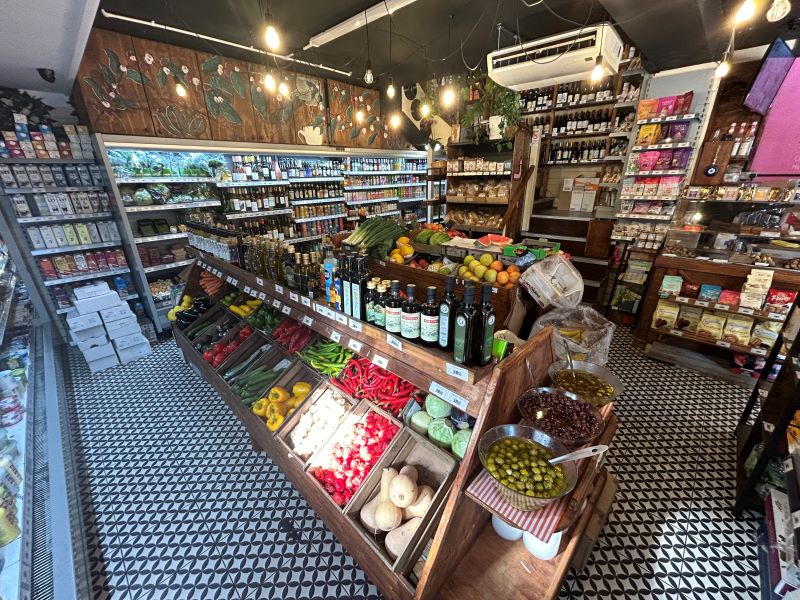
While the lottery tickets and lager remain ever-present, East London corner shops today are filled with artisan coffee, locally sourced sourdough, and stacked fresh produce. 

For Mehmet and Sahin, positioning themselves as hubs for their local community alongside offering the highest quality produce is what helps them to gain a competitive edge against the big chains.

Sahin alluded to this shift being a by-product of gentrification. 

He said: “I started working in this shop at 19, now I’m 40… I’ve seen rough Hackney and now trendy Hackney.

“As the people change, so do the products, of course.”

Greenwood Food and Wines, London Fields. Credit: Harry Crichton

In Mehmet’s store, diversification is key to keeping relevant and fending off competition from a chain directly opposite his store. 

High quality takeaway coffee, homemade Turkish pastries, even Hackney Gelato are on offer in his efforts to bring in local shoppers.

He said: “You can do your shopping and enjoy a nice flatbread or ice cream here – why not?

“It’s all about making sure people can get something different in their local shop, which they can’t get at the supermarket chains.”

Fundamental to the success of independent corner shops is their ability to offer personalised, intimate customer service. 

Mehmet even considers his customers as friends, noting how he orders ingredients on request for his regulars. 

The more flexible, personable service on offer in independent shops is a key advantage they can leverage over chain convenience stores, helping to embed them into fabric of their local communities. 

As supermarkets continue to tighten their grip on the convenience sector, it’s the personal touch, local focus, and unique offerings that keep East London’s independent stores standing strong at the heart of their communities.